

Christian Coates worked for Manchester hospitality group Living Ventures before setting up his own bar, leaving for a stint in the US and retraining as a nutritionist and personal trainer. At the beginning of this year he set up a new company in his home city, Orka Koncepts, with which he has revamped two former Living Ventures restaurants, Australasia and Grand Pacific, and launched new spots OCASA and Dear Sailor. Harden’s caught up with him to find out how Manchester is thriving.
HARDEN’S: Christian, thanks for taking the time to chat! Could you start by telling us about the specific challenges involved in re-launching venues that already have a strong identity, as is the case with both Australasia and Grand Pacific.
Christian Coates: These are both iconic venues in Manchester. So many people here have a story from a night out in one or both of them – a memory of an engagement, a birthday party or whatever, they’re part of the DNA of the city.
They are incredible, beautiful places, but I pride myself on change and reinvention, so that is what we have done.
With Australasia first, which we relaunched in March. It’s an brilliant venue that was a real trailblazer when it opened, but nothing had changed in 15 years. We saw a huge opportunity to modernise it while keeping the legacy and celebrating the things that work.
Coming from outside, we had no emotional attachment to specific aspects, which meant we could have a clear view on what could be improved. We installed a new bar space and piano bar to make it a bit classier. We replaced all the furniture, which was getting old. We put in a whole new kitchen, with a new chef team.
The challenge was to get through to the public even though there was no re-brand. We have relied on organic growth over the nine months since the relaunch, and it’s been very well received by old customers who have come back, and also by new customers who like what they see.
It’s important to realise that the whole landscape around restaurants has changed over time. What people want to eat when they go out has changed, without them necessarily knowing. So we needed to future-proof the venue.
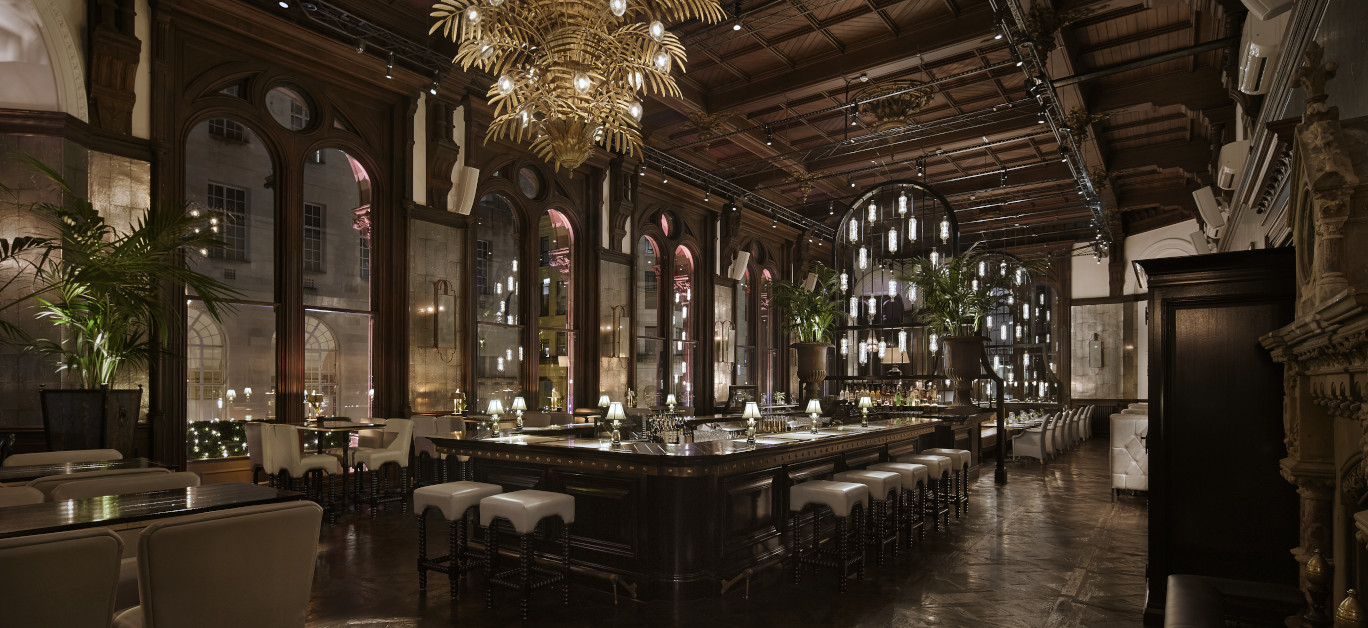
With Grand Pacific (pictured) we’re just two weeks into the relaunch, which is a very different case. It’s one of the most beautiful dining rooms in Manchester, but was having a bit of an identity crisis, with an eclectic menu that just didn’t work – you could order lamb massaman or cauliflower cheese, it didn’t really hang together.
So we did some research and looked at the history of the building, which is steeped in traditional as the Manchester Reform Club, where Winston Churchill made a famous victory speech in 1906 [after winning the Manchester North West seat as a Liberal candidate].
So we have relaunched it as a classic British brasserie with little French twists, and a menu of the classic dishes that are coming back into fashion – Oysters Rockafella, Caesar salad, Lobster Thermidor, crepes suzette and the like. We’ve also added a private dining room and are organising entertainment like murder mystery evenings and live cabaret to evoke the Roaring 20s.
But it’s also important to keep the integrity of the price point and offer value for money, to ensure that it is high quality without being a special-occasions-only place. We want guests to feel they can come back every week or two, so we can build a real community.
Looking at your own career, you started out in Manchester hospitality, moved away and retrained. What was it that drew you back, both to the city and to mainstream hospitality? Maybe that’s the wrong way of looking at it: has nutrition moved into the mainstream along with issues like sustainability and localism?
I started out with Living Ventures, working directly with Tim [Bacon] and Jeremy [Roberts], which I left to open the Cocoa Rooms. But I was very young – 24 at the time – and reached the point where I had had enough. I went away to the US, retrained as a personal trainer, and when I came back I started the UK’s first nutrition-based food company. We eventually expanded into 104 Virgin gyms, and through that the bug came back to front-facing hospitality.
But in a way that was ahead of the curve of what is happening in hospitality now. People are more discerning about provenance, about there being no nasties in their food, about organic ingredients, and fresh good-quality produce from high-end suppliers. And there is a lot of consciousness now about dietary issues – which are second nature to us.
Each of your venues is different: is this a deliberate strategy, or are there branches in the pipeline?
Yes, we’ve created brands that are not too similar to each other, so we’re not picking our own pocket. With Australasia we have premium dining, OCASA is modern Mexican and Dear Sailor a late-night bar, so they’re in three different markets. But it means people can come to Spinningfields for a night out and have dinner in Australasia, then drinks at OCASA and finish with a nightcap at Dear Sailor.
But because they are relatively close together – and we also have a catering operation in Trafford – we can pool staff and be really efficient with our supply chain and how we trade, meaning we can keep our costs and prices down.
Launching a new company, two brand-new venues and two re-launches in a year must be exhausting – so what’s next for Orka Koncepts, both in the year ahead and several years on from now?
It’s really rewarding to see how it all comes to life, now that everything is up and running. So now we need to stabilise.
But we also have a massive appetite for growth. In the immediate future we have an opportunity for an in-store concession in a department store, in the healthy eating sector.
We also have a couple of brands that we think will work in different cities, so it’s a matter of identifying the opportunities that are out there.
Manchester has emerged in recent years as a hotbed of thriving groups that have gone both national and international – San Carlo, Permanently Unique, Mission Mars to name just three. Is there a common thread that links them (and indeed the city’s thriving independent scene)? If so, what is it that’s special about Manchester?
Manchester is really booming, particularly in the last five years, with established high-end brands coming into the city from elsewhere as well as our home-grown venues. And it all draws footfall into the city: Spinningfields used to be like a ghost town not too many years ago.
What’s different about Manchester compared with London, perhaps, is that it’s a large city but it’s actually very local, a community city. London has a lot of tourism whereas we depend on our own trade – and local people are a bit more careful about their spending than tourists. They are going out for an occasion, not because they happen to be in town and it’s time to eat – and this means that every dining concept has to be really well thought through: there is a reason for everything on your plate beyond trends.
The other thing about being a community city is that everyone in the industry here has known everyone else for a long time. We’re in it together, so there’s a lot of resilience and camaraderie: if one is winning, we are all winning – and again, it’s all driving footfall into the city.
Sometimes you think that there’s really not a lot of soul in London. There’s just more care and love in Manchester!
