
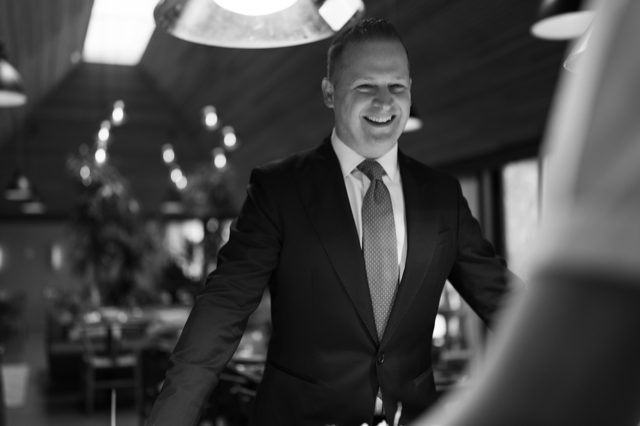
The Gold Service Scholarship awards for 2027 will be launched at the Four Seasons Hotel in London next week. Harden’s hears about it from trustee and lead judge Alex Fasoli MCA – Master of Culinary Arts – who has been involved in service at the highest levels for more than 25 years, initially at The Ritz and for the past 12 years as MD of WSH Restaurants (The Woodspeen near Newbury, The Braywood near Maidenhead, The Clockspire in Dorset, The Boxford in Boxford, and most recently 74 Charlotte Street by Ben Murphy in Fitzrovia, London).
Harden’s: Good morning Alex, and thank you for making the time to talk to us. First of all, can you give us an overview of the GSS awards.
Alex Fasoli: Good morning. It’s a pleasure to introduce these awards. Their purpose is to champion exceptional hospitality and to identify individuals who demonstrate genuine care, emotional intelligence, and a true passion for service. We want to help this new generation elevate themselves, broaden their horizons, and build a meaningful network – both with judges and with peers who share the same ambition.
Every year, around 100-150 candidates enter. They are aged between 22 and 30 and work in front‑of‑house food and beverage service across the UK. We put them through a series of tasks designed to test organisational ability, technical competence, and — crucially — emotional intelligence. That human attention, that ability to ‘read’ a guest and respond appropriately, is one of the qualities guests value most in hospitality.
The rewards are exceptional. The Scholar goes to the Mandarin Oriental in Bangkok or Hong Kong for a work placement, and to Lausanne for a management course — experiences that genuinely accelerate a career. All 8–10 finalists also enjoy trips, including Champagne and Porto, and they become part of Team Gold, joining hundreds of past finalists now working across the UK and internationally.
All judges give their time voluntarily. It’s a significant commitment, but we do it because we see the impact. Candidates apply independently, but often they are encouraged by managers who have been judges or ambassadors themselves.
So Alex, that must be difficult in a way for a business, given that it means some of your best up-and-coming employees are more likely to leave.
It’s true that some of your best young employees may move on, but that is part of their natural progression. Growth requires exposure. I did the same myself — I joined The Ritz in 2000, then worked internationally before returning to the UK. If we want to develop talent, we must accept that some will outgrow us, and that is a positive sign of the industry moving forward.
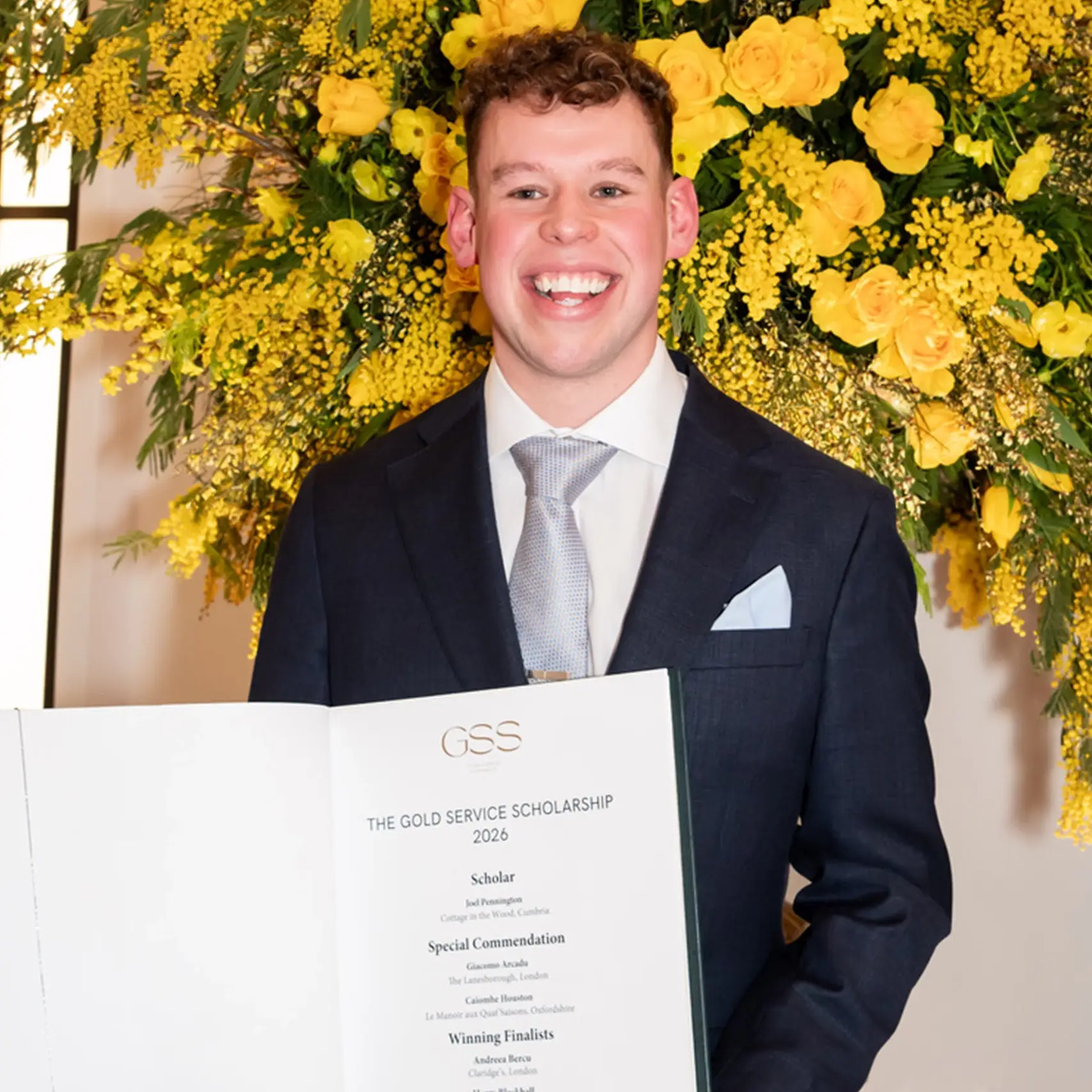
2026 Gold Service Scholar Joel Pennington, manager of The Cottage in the Wood, Cumbria
Taking a wider view, what can you tell us about service in an era of increasing automation, with the growth of food delivery services and so on?
I believe these developments will make service even more valued. The human connection is why guests return to restaurants again and again. Its relevance increases as the world becomes more automated.
Automation and AI can be extremely helpful for administrative tasks if they reduce the amount of office work our teams must do — provided we maintain headcount and reinvest that time into focusing on guests. But technology cannot improve service in itself; apps cannot replicate human warmth, intuition, or empathy.
This year has been challenging for restaurants in general, yet at WSH our five restaurants have performed well. I am absolutely convinced that our focus on service is the reason: nobody is hidden away doing paperwork. Everyone is present, visible, and engaged.
Many restaurants now use AI answering machines for reservations. To me, this removes the human element entirely. Some guests prefer online booking, but many still call because the meal is a special occasion and they may be spending a considerable amount of money and want human reassurance. They are paying for the experience from the very first interaction.
The level and warmth of service you provide is becoming a defining feature — as important as a strong wine list or an open kitchen. Restaurants that excel in this have a genuine advantage.
For the Harden’s guides, our respondents – your guests – award ratings in three categories: Food, Service and Ambience. You could argue that good ambience is impossible without good service, which means we are recognising service twice.
And it’s true. Chefs have rightly received great exposure in recent years, and food remains essential. But the UK restaurant scene has evolved dramatically. Today, it is almost a given that you will find good food. So how do you elevate the experience?
In our restaurants, we have a full page of pre‑service checks to ensure everything is perfect: lighting, music level, temperature, scents — all the details guests subconsciously register the moment they enter. We want to create a red‑carpet experience from the very start, with a professional welcome that builds trust and allows guests to relax. It’s the whole package that makes the difference, and guests notice it more and more.
We should never underestimate how much work goes into creating that atmosphere, nor the psychological impact of the details behind the scenes.
I often reference a conversation with Diego Masciaga MCA. A Martini in London, New York or Hong Kong follows the same recipe — so what creates the difference? It’s the people running the bar: their energy. Humans are drawn back to happy places.
The difference between standard service and great hospitality is invisible — it is an art. Recently, I dined in London and the first thing the waiter said was, “You have the table for one hour and 30 minutes.” I felt like standing up and leaving. At The Woodspeen, The Braywood and in any of our businesses, we never want guests to feel rushed. If a guest is late, they may be flustered — which is one more reason to enjoy a drink at the bar before having dinner.
We are commercially driven, but we focus intensely on atmosphere. We entertained 35,000 guests last year at The Woodspeen only, and delivering high‑quality service and premium food six days a week at that scale — that is the sweet spot. Yesterday we had full house again on a Thursday night; it was buzzing, warm, fun.
I believe service is becoming the decisive factor. I want guests to speak about the warmth they feel when they visit. When recruiting, this is what we look for. Skills can be taught — warmth cannot.
There’s a lot of talk at national level about employers – not just in hospitality, but across all industries – being unable to find young staff with the ‘soft’ people skills, of communication and dealing with members of the public.
I remember when we opened The Woodspeen 12 years ago: families would bring their 18‑year‑olds for a meal, and parents would quietly ask if their son or daughter could work with us to build confidence and learn to interact with different people.
At The Ritz, a strong maître d’ would speak English, French and German, moving from table to table in the guest’s language — it has a remarkable effect.
The younger generation may not do that, but they still need to approach a table and say the right thing at the right moment. This requires empathy, emotional intelligence, and a deep understanding of people. And this is exactly what we look for in the GSS — the cream we want to find and reward.
